The Feature Phone Is Making a Comeback. Here’s Why Wireless Should Pay Attention.
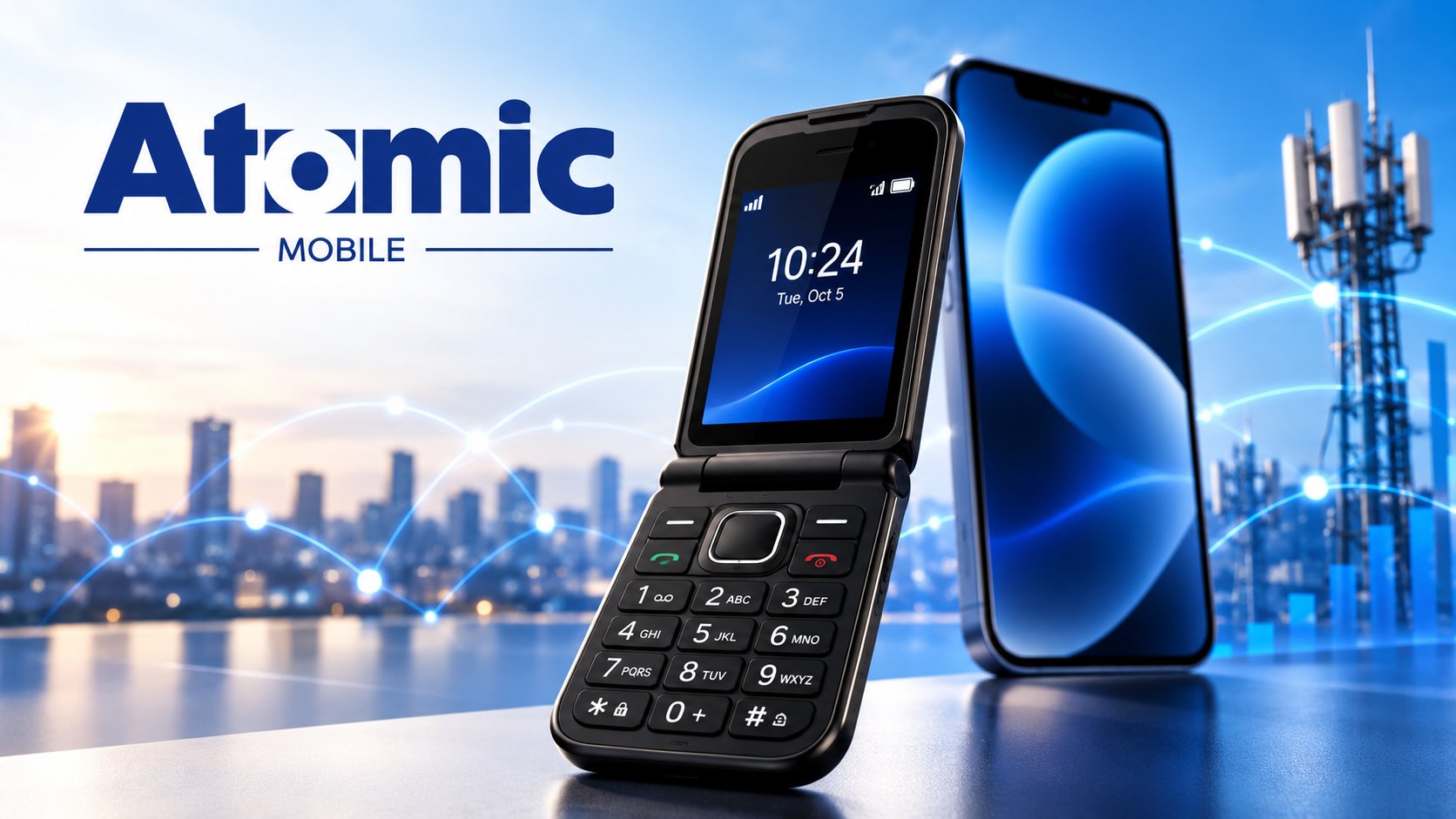
The Feature Phone Is Making a Comeback. Here’s Why Wireless Should Pay Attention.
For most of the last two decades, the direction of the mobile phone market seemed obvious.
Phones were getting smarter.
Screens were getting bigger.
Applications were becoming more important.
Data consumption was exploding.
And the traditional feature phone appeared destined to become a relic of an earlier era.
Except it never disappeared.
In fact, something interesting has happened.
Consumers are rediscovering simpler mobile devices. Parents are looking for alternatives to giving young children unrestricted smartphones. Some younger consumers are intentionally reducing their screen time. Seniors continue to value simplicity. Businesses still need inexpensive and durable devices for certain workers. And some customers simply do not need 50GB of data, dozens of applications and a $1,000 smartphone.
The smartphone won the device market.
That does not mean every customer needs a smartphone.
And for the wireless industry, that distinction matters.
Feature Phones Are a Small Market. But Small Doesn't Mean Irrelevant.
Let's put the trend in perspective.
Feature phones are not about to replace smartphones.
Counterpoint Research estimated that feature phones represented a little more than 2% of overall U.S. handset sales in 2022. But instead of disappearing as many might have expected, the research firm subsequently forecast approximately 2.8 million feature phones would be sold in the United States in 2023, with sales remaining relatively stable in the near term.
That is an important distinction.
The interesting story isn't that millions of Americans are abandoning their iPhones and Android devices.
They aren't.
The story is that a category many assumed would eventually disappear continues to serve specific customer needs.
And some of those needs are becoming more relevant.
The Digital Detox Movement Changed the Conversation
One of the more unexpected sources of feature phone interest has come from younger consumers.
The same generations that grew up with smartphones are also confronting the downside of being connected to them constantly.
Social media.
Notifications.
Endless scrolling.
Work messages.
Email.
Streaming.
Applications competing for attention throughout the day.
For some consumers, the answer isn't another application designed to reduce screen time.
It's a simpler device.
Counterpoint Research specifically identified Gen Z and millennials seeking digital detoxes, minimalist lifestyles and opportunities to unplug as contributors to renewed U.S. interest in feature phones.
HMD, one of the best-known manufacturers in the category, reported double-digit growth in its own feature phone sales for two consecutive years through 2024 while promoting devices around the broader digital detox movement.
Again, this does not mean smartphones are going anywhere.
It means simplicity itself has become a product feature.
That creates an interesting question for wireless providers:
If the customer's objective is to use their phone less, why are nearly all wireless plans designed around giving them more?
More data.
More hotspot.
More streaming.
More applications.
More features.
There may be room in the market for products designed around the opposite philosophy.
Parents Have a Different Problem
There is another segment where the traditional smartphone model can be a poor fit: children.
Parents increasingly face a difficult decision.
Their child may need a way to call or text them.
They may need connectivity for emergencies.
Parents may want location or safety functionality.
But giving a child a fully capable smartphone can also mean giving them access to social media, browsers, applications, games and virtually unlimited internet access.
Those are two very different requirements bundled into the same device.
The wireless industry has already started addressing this problem through kids' smartwatches, parental-control software and specialized devices.
But feature phones and limited-function devices belong in that conversation too.
There is a large conceptual space between:
No phone at all
and
A completely unrestricted smartphone.
Wireless providers that understand that middle ground may have an opportunity to build products specifically around families rather than simply offering another generic wireless plan.
Seniors Still Value Simplicity
Not every customer wants the newest interface.
For some customers, the most important features of a mobile device remain remarkably straightforward:
Make a call.
Answer a call.
Send a message.
Read the screen.
Hear the person on the other end.
Reach someone during an emergency.
A simple device with physical buttons, a familiar interface, strong battery life and fewer layers of software can be more valuable to some customers than a device with significantly greater technical capabilities.
This market has existed for years.
What is changing is that simplicity is no longer relevant to only one demographic.
The same fundamental product attribute can appeal to an older consumer who wants an easier device and a younger consumer who wants fewer distractions.
The motivation is different.
The product requirement can be surprisingly similar.
Enterprise Is Another Overlooked Feature Phone Market
Feature phones are not purely a consumer story.
There are plenty of jobs where handing an employee a premium smartphone makes little economic or operational sense.
Think about certain workers in:
Construction.
Warehousing.
Hospitality.
Transportation.
Manufacturing.
Agriculture.
Field services.
Retail.
Security.
An employer may simply need an employee to be reachable.
In some environments, durability matters more than applications.
In others, limiting functionality may actually be desirable.
A simpler device can potentially mean a lower device cost, less distraction, easier replacement and a more controlled communications environment.
Counterpoint has previously pointed to B2B demand as one of the factors supporting the U.S. feature phone category.
For MVNOs, that creates opportunities beyond traditional consumer prepaid wireless.
A specialized enterprise offering does not need tens of millions of potential customers.
It needs to solve a specific problem for a specific customer segment.
The Wireless Plan May Be the Bigger Problem
This is where the opportunity becomes particularly interesting from an MVNO perspective.
The device exists.
The customer exists.
But the wireless plan often still reflects a smartphone-centric market.
A customer using a feature phone may consume extraordinarily little mobile data compared with the average smartphone user.
Yet many wireless products are designed around increasingly large data allowances or unlimited usage.
That can create a mismatch between the device, the customer's behavior and the rate plan.
Why sell a customer 20GB, 50GB or unlimited data when the device may consume only a tiny fraction of it?
The answer historically has often been simplicity.
Carriers and MVNOs do not necessarily want dozens of highly specialized rate plans.
But modern wireless infrastructure makes segmentation considerably easier.
An operator that understands actual usage can potentially create plans around the economics of a particular customer segment rather than forcing every subscriber into essentially the same product.
This is particularly important because low-data plans can behave very differently economically from unlimited smartphone plans.
The retail price may be lower.
But so can the underlying network cost.
The important question becomes contribution margin rather than ARPU alone.
We have discussed this before when looking at how MVNOs actually make money.
A lower-priced customer is not necessarily a less valuable customer if that customer is inexpensive to acquire, inexpensive to serve and remains with the provider for a long time.
Usage Visibility Becomes Critical
There is a catch.
Low-data plans work particularly well when customers actually remain low-data users.
That makes usage visibility important.
Imagine an MVNO creates a feature phone plan around a very small monthly data allowance.
Most subscribers use almost no data.
The economics look excellent.
But a small number of devices begin consuming substantially more data than expected.
Perhaps the device supports functionality the operator did not anticipate.
Perhaps tethering or hotspot functionality is available.
Perhaps software behavior changes.
Perhaps the device classification is wrong.
Perhaps customers discover a way to use the plan on devices for which it was never intended.
Suddenly the economics can change.
That is why operators should understand not simply the retail price of a plan, but how subscribers actually consume the underlying network resources.
Atomic UsageIQ was designed around this problem: giving wireless operators near real-time visibility into data consumption so they can understand usage behavior, identify unusual consumption and make better plan decisions.
The smaller the expected data allowance, the more important unexpected usage can become.
Device Controls Matter Too
Plan design alone may not be enough.
If an operator creates a highly attractive low-data feature phone plan, it needs to make sure that the plan is being used by the devices and customers for which it was designed.
Device identification can therefore become part of the product architecture.
IMEI and device-type controls can help an operator differentiate between eligible feature phones and smartphones.
That allows the business model to be built around the actual characteristics of the device category rather than relying exclusively on customers to select the appropriate plan.
This is a broader lesson for MVNOs.
Rate plans do not have to be designed only around gigabytes.
They can be designed around:
Devices.
Customer segments.
Use cases.
Applications.
Organizations.
Behaviors.
And specific business problems.
The more precisely the product matches the customer, the less reason there is to compete exclusively on price.
The Modern Feature Phone Can Evolve Too
Feature phones themselves are also changing.
The category does not necessarily have to mean recreating a phone from 2005.
Counterpoint has highlighted technologies such as eSIM and NFC as potential ways to make feature phones more relevant to modern consumers while maintaining the simplicity that attracts customers in the first place.
That could create a new class of devices that intentionally sits between the traditional feature phone and today's smartphone.
Simple connectivity.
Long battery life.
Voice and messaging.
Payments.
Location.
Limited applications.
Safety features.
Modern network compatibility.
Potentially eSIM.
The objective would not be to make the feature phone progressively smarter until it becomes another smartphone.
It would be to identify which modern capabilities actually improve the product without destroying the simplicity that makes it attractive.
That distinction could become increasingly important.
The Opportunity Isn't One Market
It would be easy to look at feature phones and search for a single reason they are still selling.
There isn't one.
A teenager interested in reducing screen time is not the same customer as an 80-year-old who wants physical buttons.
A parent buying a first phone for a child has different requirements from a construction company equipping workers.
A traveler buying an inexpensive secondary phone has different priorities from an enterprise looking for rugged devices.
Yet all of them can arrive at a similar conclusion:
A smartphone may provide more functionality than I actually need.
That is what makes this category interesting.
The opportunity isn't necessarily to create one enormous feature phone MVNO.
It may be to create multiple highly targeted wireless products around specific groups that have been poorly served by smartphone-centric plans.
Niche Doesn't Mean Small Business
The wireless industry naturally gravitates toward scale.
How many subscribers?
How many gross additions?
How much ARPU?
Those metrics matter.
But a specialized MVNO does not necessarily need to become a national household name to build a successful business.
As we explored in How Many Subscribers Does an MVNO Need to Be Profitable?, subscriber count alone does not determine whether an MVNO works.
Customer acquisition cost matters.
Network cost matters.
Churn matters.
Operating expenses matter.
Contribution margin matters.
Distribution matters.
A specialized provider serving 20,000 highly profitable customers can have a better business than a provider serving 100,000 customers acquired through expensive advertising and aggressive promotional pricing.
Feature phones fit particularly well into that philosophy.
This isn't necessarily a mass-market opportunity.
It is a segmentation opportunity.
The Bigger Lesson for Wireless
Feature phones are interesting.
But the larger lesson has very little to do with flip phones.
The wireless industry has spent years moving toward more.
More data.
More speed.
More applications.
More devices.
More features.
Those advances have transformed how we communicate and created enormous value.
But innovation does not always mean adding something.
Sometimes innovation means recognizing what a customer does not need.
There are consumers who want less screen time.
Parents who want connectivity without unrestricted internet access.
Seniors who want simplicity.
Businesses that want inexpensive, durable communications.
Organizations that need purpose-built devices rather than general-purpose computers in everyone's pocket.
Those customers may not represent the center of the smartphone market.
They do not have to.
Wireless has become mature enough that the next opportunities will increasingly come from segmentation rather than one product designed for everyone.
The companies that recognize those segments early can build wireless offerings around them.
The Bottom Line
The feature phone isn't replacing the smartphone.
It doesn't need to.
Millions of devices can represent a meaningful market, particularly when those customers share identifiable needs that mainstream wireless products do not fully address.
For MVNOs and brands considering wireless, that is the real opportunity.
Don't start by asking:
What wireless plan can we sell?
Start by asking:
Who isn't being served particularly well by the plans that already exist?
Feature phone users may be one answer.
And there are almost certainly many more.
At Atomic Mobile, we help companies design, launch and scale wireless offerings around specific customers and use cases rather than forcing every business into the same telecom model.
Because sometimes the biggest wireless opportunity isn't giving customers more.
It's understanding when they actually want less.
Brian Latchford
Author