MNO Price Increases Confirm an Atomic Signal
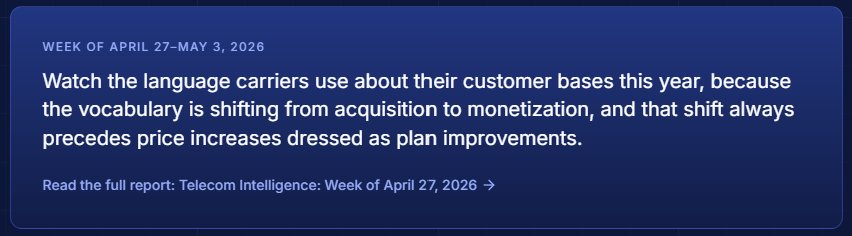
In early May, Atomic Signals highlighted a subtle but important change in the language mobile network operators were using to describe their customers.
“Watch the language carriers use about their customer bases this year, because the vocabulary is shifting from acquisition to monetization, and that shift always precedes price increases dressed as plan improvements.”
That Signal is now playing out across the U.S. wireless market.
Carriers are increasing prices, retiring legacy plans and moving customers into newer offerings that include additional features, benefits or price guarantees. The plans may technically offer more, but the outcome for many customers is straightforward: a higher monthly wireless bill.
What happened next
AT&T increased pricing on several retired unlimited and Mobile Share plans beginning in April. Depending on the plan, customers experienced increases ranging from $5 per line to $10 per account, often accompanied by additional hotspot data or other plan enhancements. AT&T describes the changes here.
On May 7, Verizon retired its original Unlimited Ultimate plan and introduced an updated version with additional identity protection and family features. The updated plan carried a higher price for customers adding or changing to it. Verizon’s plan comparison confirms the May 7 transition.
Then T Mobile began notifying customers that numerous legacy plans were being retired. Some customers were transitioned to newer plans with monthly increases of approximately $4 to $6 per line. The new plans included additional benefits and a five year price guarantee, reinforcing the exact pattern Atomic Signals had identified: a price increase presented alongside a plan improvement.
The individual announcements differ, but the strategy is remarkably consistent.
From acquisition to monetization
For several years, the U.S. wireless market was heavily focused on customer acquisition. Carriers competed through device subsidies, switching incentives, free lines and increasingly aggressive promotional pricing.
But acquiring customers is expensive. Once subscriber growth becomes more difficult, operators naturally turn their attention toward generating more revenue from the customers they already have.
That can take several forms:
Increasing prices on legacy plans
Retiring older rate plans
Moving customers into higher priced packages
Adding features that justify a higher monthly charge
Bundling wireless with home internet, entertainment or financial services
Using price guarantees to make a new, higher price feel more predictable
None of these strategies are inherently unreasonable. Networks require continued investment, customer usage continues to grow and new services create real value.
But the language matters.
When the conversation shifts from acquiring subscribers to increasing customer value, improving account economics or modernizing older plans, pricing actions often follow.
That was the Signal.
Why this matters for MVNOs
MNO price increases create an opening for MVNOs, but only if they offer customers a meaningful alternative.
That does not necessarily mean becoming the cheapest provider in the market. Competing only on price can lead to the same race to the bottom that eventually forces larger carriers to increase rates.
The stronger opportunity is to build plans around a clearly defined customer.
An MVNO can offer simpler pricing, more relevant features, better service or an experience designed for a particular community, industry or use case. It can remove benefits customers do not value and concentrate resources on the ones they do.
As major carriers expand bundles and reposition customers into broader ecosystems, focused MVNOs have an opportunity to become the simpler and more transparent choice.
The bigger Signal
The latest price increases are not isolated billing adjustments. They reflect a broader shift in the wireless market.
Carriers are balancing subscriber growth with profitability. Plan structures are becoming more complex. Additional services are being used to support higher pricing. Customers are being encouraged to evaluate the value of their entire relationship with their provider, rather than the price of connectivity alone.
That creates opportunity throughout the wholesale wireless ecosystem.
The next generation of successful MVNOs will not win simply because they charge less. They will win because they understand their customers better, package connectivity more intelligently and deliver value that customers can immediately recognize.
Atomic Signals identified the change in language.
The market has now confirmed it.
Thinking about launching or expanding an MVNO?
Atomic Mobile provides the network access, technology, and operational support needed to launch faster and scale smarter.
Brian Latchford
Author