The Seductive Trap of "Network-in-a-Box"
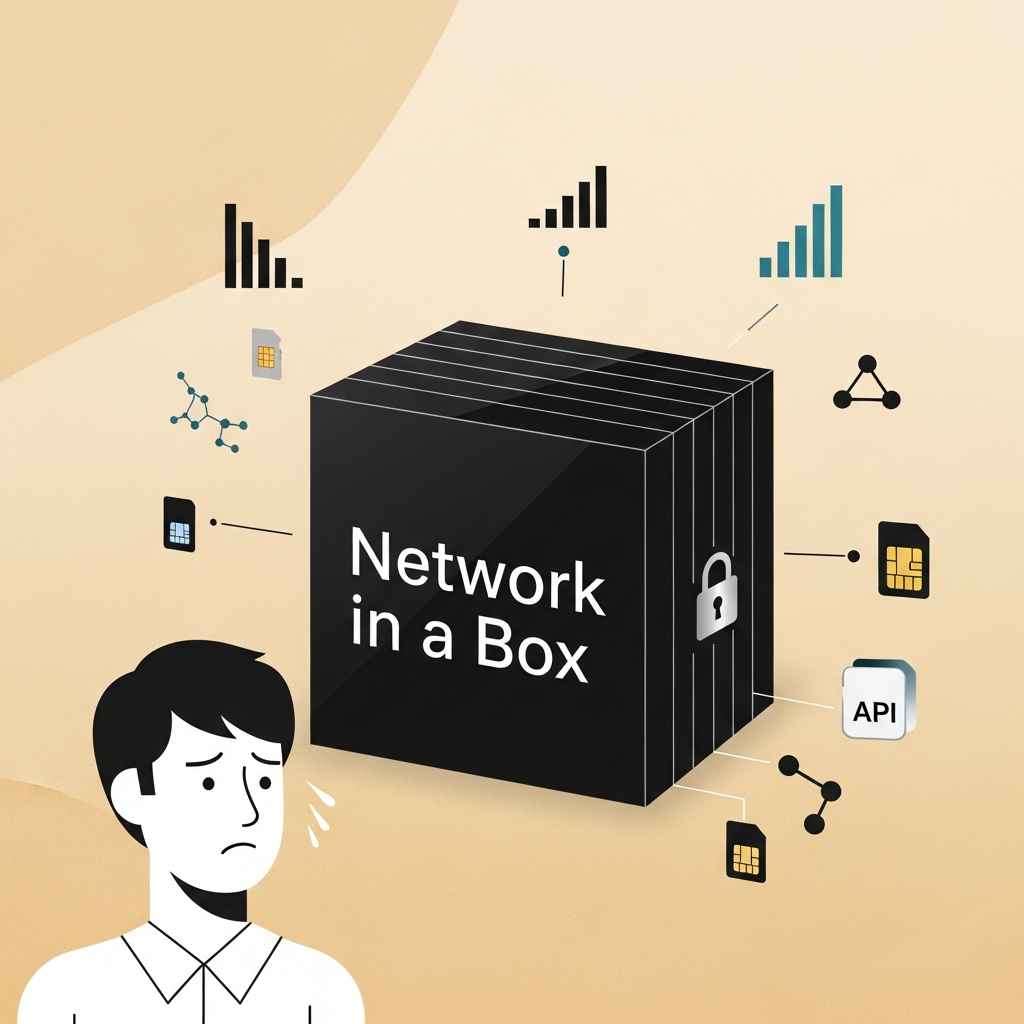
The pitch is everywhere. If you browse LinkedIn or attend any telecom conference, you have seen the slides: "Launch your own mobile brand in 30 days." "Be the Shopify of Telecom." "Zero-touch network-in-a-box."
For a founder looking to enter the high-growth mobile market, it sounds like a dream. You get a brand, some SIM cards, a basic app (maybe), and a wholesale agreement with a major carrier. The barrier to entry has truly never been lower. But here is the technical reality that the sales decks will not tell you: there is a massive, structural difference between a barrier to entry and a barrier to scale.
________________________________________
The Honeymoon Phase
In the first 90 days, the white-label model works beautifully. You launch your website, your first 100 customers sign up, and the SIMs arrive in the mail. The host carrier handles the heavy lifting of the core, and your white-label provider gives you a basic dashboard to manage subscribers. You feel like a disruptor.
But then, you hit customer 1,001.
________________________________________
The Technical Cage
The problem with a "box" is that it is rigid. Most white-label kits are built on top of monolithic, legacy BSS/OSS stacks. They are designed for a lowest common denominator use case — standard consumer voice, text, and data.
The moment you want to differentiate, you hit a wall. Want to offer a dynamic data pool for IoT devices? Not in the box. Need a custom billing cycle for a corporate fleet client? Not in the box. Want to integrate your platform directly with a third-party ERP system? Definitely not in the box.
You are not building a mobile network. You are renting a cage with a nice paint job.
________________________________________
The Hidden Costs
Beyond the technical limitations, the financial structure of most network-in-a-box solutions is designed to keep you dependent. As your subscriber base grows, the per-unit economics often get worse, not better. You have no leverage to renegotiate because you have no alternative infrastructure.
Furthermore, the data — your most valuable asset for understanding customer behavior and optimizing your network — is often locked inside the platform. You are flying blind on your own business.
________________________________________
The Alternative: Composable Infrastructure
The MVNOs that scale successfully are not the ones who found a better box. They are the ones who rejected the box entirely and built on composable, API-first infrastructure.
This means:
• An MVNE that exposes raw network events in real-time
• A billing engine you can configure, not just configure around
• SIM management APIs that integrate with your existing workflows
• Data pipelines that give you ownership of your subscriber telemetry
This approach requires more work upfront. But it gives you the architectural freedom to build a differentiated product, the data ownership to make intelligent decisions, and the negotiating leverage to improve your economics as you grow.
________________________________________
The Bottom Line
The network-in-a-box is a fine place to learn the business. It is a terrible place to build one. If your ambition is to create a lasting, profitable MVNO — whether for consumers, enterprises, or IoT — you need to own your infrastructure stack from the start.
The seductive pitch of "launch in 30 days" is real. The question is what happens on day 31.
Ready to launch? Explore MVNO in a Box — Atomic Mobile's turnkey platform with carrier connectivity, billing, eSIM, APIs, and compliance in one place.
Brian Latchford
Author