Why Most MVNOs Fail in the First 24 Months
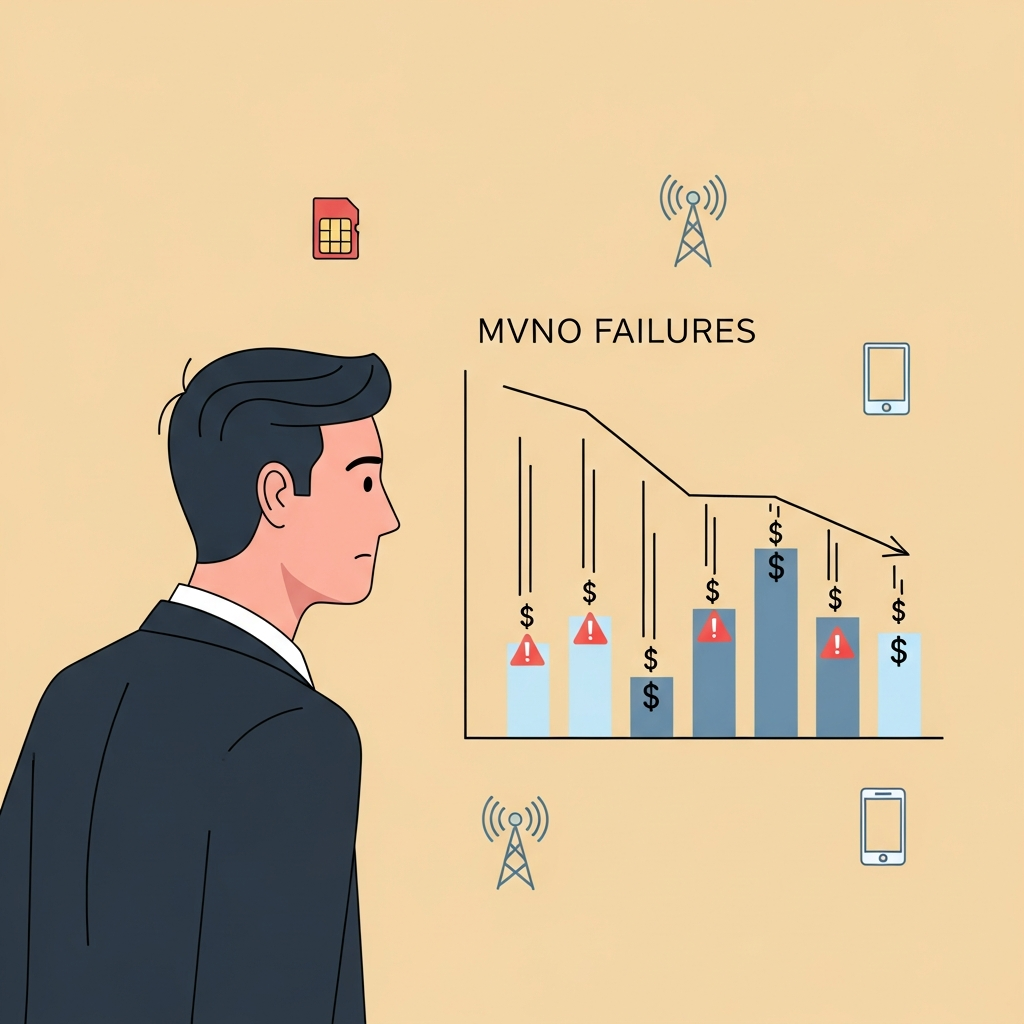
Many virtual operators launch with ambitious goals, but most do not survive beyond year two. I am Brian Latchford, CEO of Atomic Mobile, an MVNA and MVNE powering companies that operate mobile networks. I am also an investor, board member, and speaker focused on global connectivity. I started this newsletter to share insights on wireless infrastructure, MVNO economics, IoT platforms, and the evolving mobile ecosystem so you can see how the industry really works behind the scenes.
Now, let us get to the point: why do most MVNOs fail?
________________________________________
- Underestimating Wholesale Economics
Many new MVNOs assume that simply reselling a carrier's network is enough to make a profit. In reality, wholesale agreements are complex and often include:
• Minimum monthly commitments
• Hidden fees and regulatory obligations
• Margins that shrink fast when customer acquisition costs are high
Without understanding these numbers up front, early losses pile up quickly.
________________________________________
- Overlooking Operational Complexity
Running a virtual network is not just SIM cards and billing. MVNOs must manage:
• Customer service at scale
• Fraud and credit risk
• Regulatory reporting
• Platform integration with carriers
Underestimating operational overhead is a fast track to burnout and closure.
________________________________________
- Failing to Differentiate
The MVNO market is crowded. Launching without a clear value proposition — whether it is pricing, service, or specialized IoT offerings — makes it nearly impossible to retain customers.
________________________________________
- Scaling Too Fast or Too Slow
Some MVNOs try to scale before processes are stable; others stay too small to survive. Both approaches are risky. Success requires a balanced growth plan that aligns marketing, operations, and carrier agreements.
________________________________________
- Choosing the Right MVNA or MVNE
Even if you understand the economics and operations, your choice of MVNA or MVNE can make or break your network. The right partner provides reliable infrastructure, flexible platforms, and operational support that scales with your growth. Selecting a partner who understands both wholesale agreements and real-world execution dramatically increases your chances of success.
________________________________________
Bottom line:
Running a virtual mobile network is deceptively hard. But done right, it can be profitable, scalable, and highly strategic. Understanding the economics, building operational rigor, differentiating your offer, and choosing the right MVNA or MVNE from day one are the keys to long-term success.
Ready to launch? Explore MVNO in a Box — Atomic Mobile's turnkey platform with carrier connectivity, billing, eSIM, APIs, and compliance in one place.
Brian Latchford
Author