Why Loyalty Programs and Wireless Belong Together
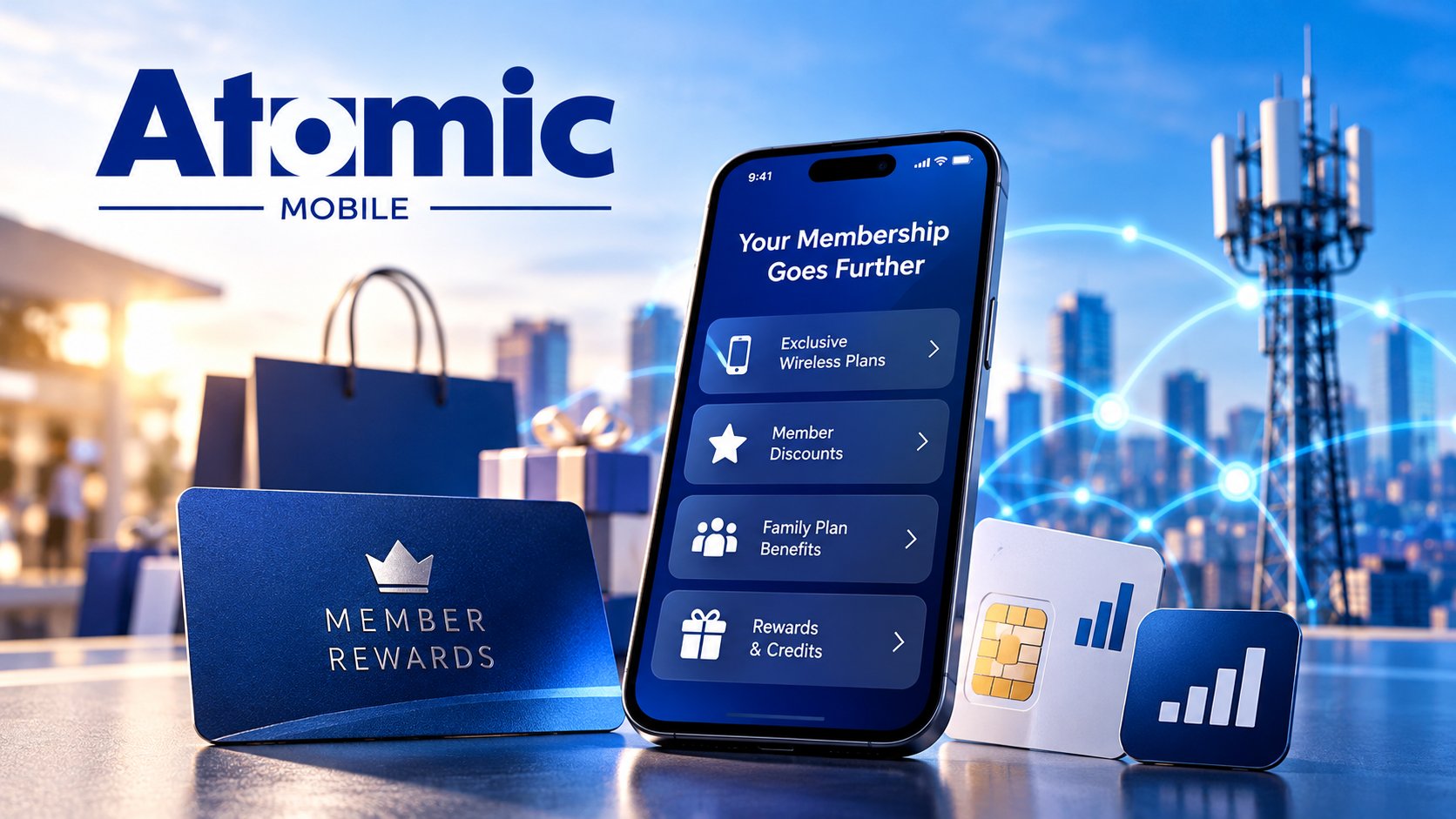
Why Loyalty Programs and Wireless Belong Together
For decades, loyalty programs have operated around a relatively simple concept.
Spend money. Earn points. Redeem rewards.
Buy enough products, book enough trips, or accumulate enough purchases, and eventually receive something in return.
Discounts.
Gift cards.
Free merchandise.
Travel rewards.
Exclusive experiences.
These programs have become an important part of how brands attract and retain customers.
But I believe there is an opportunity that many loyalty programs have barely begun to explore.
What if one of the most valuable loyalty benefits isn't something customers earn occasionally, but something they already pay for every month?
Something they need.
Something their families use.
Something that creates real, measurable financial value.
Something that could strengthen the relationship between the customer and the brand every single month.
That something is wireless.
And I think the intersection of loyalty programs and mobile connectivity represents one of the more interesting opportunities in the evolving MVNO market.
The Problem With Traditional Loyalty Programs
Loyalty programs are everywhere.
Grocery stores have them.
Airlines have them.
Hotels have them.
Retailers have them.
Credit card companies have them.
Even local restaurants and coffee shops have them.
And while many of these programs are successful, they increasingly face the same challenge.
How do you create a benefit that customers genuinely value?
Points can be difficult to understand.
Redemption requirements can be complicated.
Rewards may take months to earn.
Some benefits are rarely used.
And in many cases, competing loyalty programs look remarkably similar.
A customer might belong to ten different programs without feeling particularly loyal to any of them.
That creates an important distinction.
Enrollment is not the same thing as loyalty.
Having someone's email address and giving them a membership number does not automatically create a meaningful relationship.
The objective should be to give customers a reason to engage, a reason to remain, and a reason to choose your brand over another.
That's where wireless becomes interesting.
Wireless Is Different From Most Loyalty Rewards
Think about the typical American household.
Wireless service isn't an occasional purchase.
It isn't something customers buy only when they have accumulated enough points.
It's a recurring expense.
Month after month.
Year after year.
For many households, multiple family members have wireless lines.
That makes mobile connectivity fundamentally different from traditional loyalty rewards.
A customer may redeem a gift card once or twice a year.
But a wireless benefit can deliver value every single month.
Imagine a loyalty program offering members:
- Exclusive wireless plans
- Monthly discounts on mobile service
- Wireless credits earned through purchases
- Family plan benefits
- Additional data allowances
- Premium wireless benefits for higher membership tiers
- Discounted secondary lines
Suddenly, the loyalty program isn't simply rewarding past purchases.
It's helping customers reduce an expense they already have.
And that can create a much more tangible relationship.
The Next Great Loyalty Benefit May Be a Lower Phone Bill
Let's consider a hypothetical example.
A membership organization has 250,000 members.
It offers a collection of traditional benefits, including discounts, rewards and special promotions.
Now imagine it introduces an exclusive wireless offering.
Members can receive a competitively priced mobile plan, with an additional $10 monthly discount funded through the membership program.
For a participating member, that discount represents:
$120 in potential annual savings.
That's easy to understand.
There are no complicated redemption charts.
No points conversions.
No waiting for a special promotion.
The benefit appears every month.
Of course, the organization still needs to determine whether the cost of providing that benefit makes financial sense.
But the perceived value is straightforward.
And perhaps more importantly, the benefit creates a recurring connection between the member and the organization.
The customer doesn't have to remember to redeem a reward.
The reward is part of something they already use.
The Traditional MVNO Starts With Wireless. A Loyalty MVNO Starts With Customers.
This may be the most important part of the opportunity.
Traditional wireless startups face a difficult challenge.
They need to acquire customers in an extremely competitive market.
They compete against national carriers with enormous advertising budgets, established retail distribution, recognizable brands and millions of existing subscribers.
Customer acquisition can become one of the largest expenses in the business.
But a loyalty company begins from a very different position.
It may already have:
Hundreds of thousands of members.
An established brand.
A mobile application.
Regular customer communications.
Existing payment relationships.
A rewards platform.
Marketing channels.
Customer support infrastructure.
And most importantly, an audience that already has a reason to engage with the company.
Instead of spending heavily to introduce an unfamiliar wireless brand to the public, the company can offer connectivity to people who already know and trust it.
We've explored the economic importance of this advantage in Your Brand Already Has Customers. That Changes the Economics of Wireless.
The principle is simple.
The traditional MVNO starts with wireless and tries to find customers. A loyalty MVNO starts with customers and adds wireless.
Those are two very different business models.
Wireless Doesn't Have to Be Free
One misconception I would challenge immediately is the idea that a loyalty program must give away wireless service to make the offering attractive.
It doesn't.
There are several potential models.
1. Exclusive Member Pricing
A membership organization negotiates or creates wireless plans available only to its members.
The customer receives competitive pricing.
The organization differentiates its membership.
And depending on the commercial arrangement, the wireless offering may generate recurring revenue.
2. Subsidized Wireless
The loyalty company contributes a fixed amount toward the member's wireless bill.
That could be $5, $10 or another amount each month.
The subsidy becomes part of the cost of maintaining the customer relationship.
For a business that already spends money on customer retention, that may be an attractive alternative to traditional rewards spending.
3. Wireless Credits Through Rewards
Customers earn wireless credits based on qualifying purchases or other loyalty activity.
Instead of redeeming points for merchandise, they can apply eligible rewards toward mobile service.
A retailer, for example, could allow customers to reduce their next wireless bill through qualifying purchases.
That creates a connection between shopping activity and a recurring household expense.
4. Premium Membership Benefits
A company could include a wireless benefit in a paid membership tier.
A premium member might receive an additional data allowance, a discount on service or access to a special plan.
The objective isn't necessarily to make money directly from the wireless benefit.
It may be to make the premium membership more attractive.
5. Family and Multi-Line Benefits
A single member relationship can potentially extend to multiple wireless lines.
That is particularly interesting because wireless is often a household purchase.
An organization may have one member, but that member could have three or four family members using wireless service.
A well-designed offering could create value for the entire household while expanding the wireless relationship beyond the original member.
Not every model will work for every company.
But that's the point.
Wireless can be structured around the loyalty program rather than forcing the loyalty program into a traditional carrier pricing model.
The Economics Could Be More Attractive Than They First Appear
Let's look at another hypothetical example.
A loyalty platform has 500,000 active members.
Suppose just 2% adopt a branded wireless offering.
That's 10,000 wireless subscribers.
Assume the wireless offering generates $8 in monthly contribution margin per subscriber after its variable costs.
That produces:
$80,000 in monthly contribution.
Or:
$960,000 in annual contribution before incremental fixed operating expenses.
Those numbers are illustrative, not an industry forecast or a guaranteed outcome.
Actual results depend on pricing, wholesale network costs, data consumption, platform expenses, customer support, billing, subsidies and other operating costs.
But the example demonstrates why an existing membership base can be such an advantage.
The company doesn't necessarily need to persuade the entire market to buy wireless.
It needs to convert a relatively small percentage of an audience it already serves.
And there is another potential economic benefit that isn't included in those numbers.
Retention.
The Retention Opportunity May Be Bigger Than the Wireless Revenue
This is where I think loyalty programs should pay particularly close attention.
Suppose a membership organization earns $15 per month from each paying member.
It introduces a wireless benefit that generates only a modest amount of direct contribution.
If the wireless offering makes members more likely to renew their memberships, the total economic impact may be significantly greater than the margin generated by wireless alone.
Consider two members.
Member A uses the organization's traditional benefits.
Member B uses those same benefits but also receives an exclusive wireless discount through the organization.
When renewal time arrives, Member B may have an additional reason to remain.
Canceling the membership could mean losing a recurring benefit the household values.
That doesn't guarantee improved retention.
The wireless experience still needs to be reliable, competitively priced and easy to manage.
But it creates a testable hypothesis:
Can a recurring wireless benefit improve retention in the underlying membership business?
As we discussed in The MVNO Churn Problem: Why Adding Subscribers Isn't Enough, acquiring customers is only one part of building a healthy recurring revenue business.
Keeping them is just as important.
For loyalty programs, wireless creates an opportunity to influence retention across two relationships simultaneously.
The wireless subscription.
And the underlying membership.
The Best Loyalty Benefit
Brian Latchford
Author